
Understanding Liability When Unsafe Retail Properties Cause Serious Injuries
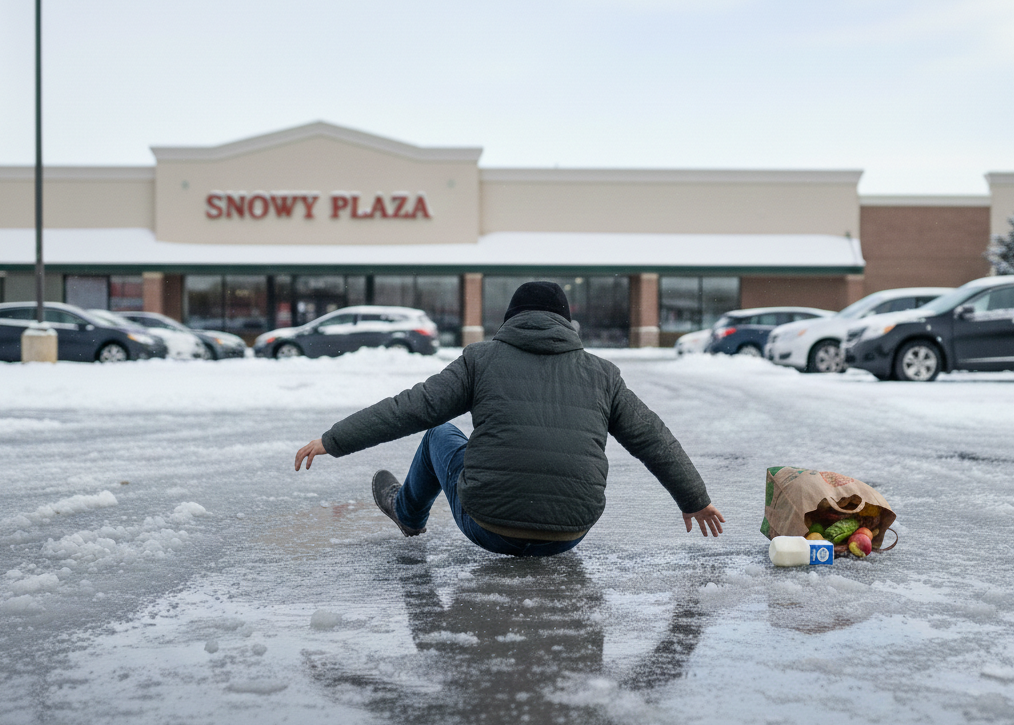
Key Takeaways About Slip and Fall Accidents in NJ
Slip and fall injuries at shopping centers and retail parking lots are often caused by unsafe
conditions like wet floors, uneven pavement, or snow and ice. Under New Jersey premises
liability law, injured visitors may have the right to compensation when property owners or
managers fail to maintain safe conditions. This guide explains who may be responsible, what
steps to take after a fall, and when legal help may be appropriate.
Who Is Responsible When a Fall Happens in a Store or Parking Lot?
Slip and fall accidents are one of the most common injury claims involving shopping centers,
grocery stores, and retail plazas throughout Northern New Jersey. Hazards like untreated ice,
cracked sidewalks, poor lighting, or unmarked spills can quickly turn a routine errand into a
serious injury.
Under New Jersey law, property owners and those responsible for maintenance must take
reasonable steps to keep their premises safe. When they fail to do so, injured visitors may have
the right to pursue compensation for medical costs, lost income, and recovery-related expenses.
Who Can Be Held Liable for a Slip and Fall in New Jersey?
Liability in shopping center slip and fall cases depends on who controlled the property and
whether the dangerous condition was known or should have been addressed. Responsible
parties may include:
- A store or business tenant
- A shopping center or property management company
- A third-party maintenance or snow removal contractor
Each case turns on evidence showing how long the hazard existed and whether reasonable
steps were taken to fix it or warn visitors.
Why Slip and Fall Accidents Happen in Shopping Centers
Shopping centers see constant foot traffic, which means hazards can develop quickly if property
owners are not attentive. Common causes of slip and fall accidents in Sussex County retail
locations include:
- Snow or ice buildup in parking lots or walkways
- Wet floors near entrances, restrooms, or grocery aisles
- Uneven sidewalks, cracked pavement, or loose mats
- Poor lighting in parking areas or stairwells
- Spills that were not cleaned within a reasonable time
These conditions are not always obvious to shoppers, which is why the law places responsibility
on property owners and managers to address them promptly.
What You Need to Prove in a Slip and Fall Claim
Not every fall automatically leads to a valid claim. To pursue compensation, injured victims
generally must show:
- A dangerous condition existed on the property
- The property owner had notice of the condition or should have discovered it
- Reasonable steps were not taken to correct or warn about the hazard
- The condition directly caused the injury
Evidence such as incident reports, surveillance footage, photographs, and witness statements
can be critical in these cases.
Common Injuries From Slip and Fall Accidents
ISlip and fall injuries can be more serious than many people expect, particularly for older adults.
Common injuries include:
- Broken wrists, ankles, and hips
- Head injuries and concussions
- Back and spinal injuries
- Torn ligaments or soft tissue damage
- Injuries requiring surgery or long-term rehabilitation
These injuries can result in mounting medical bills, time away from work, and long-term
limitations.
What to Do After a Slip and Fall in a Sussex County Shopping Center
If you are injured in a fall, taking the right steps early can protect both your health and your legal
rights:
- Report the incident to store management immediately
- Request a written incident report
- Take photos of the hazard and surrounding area
- Get contact information for any witnesses
- Seek medical attention as soon as possible
Even if injuries seem minor at first, documentation matters.
How Slip and Fall Claims Are Handled in Northern New Jersey
Slip and fall cases are often challenged by insurance companies, which may argue that the
hazard was open and obvious or that the injured person was at fault. New Jersey’s comparative
negligence law allows injured individuals to recover compensation even if they share some
responsibility, as long as they are not more than 50 percent at fault.
This is why careful investigation and documentation are essential.
When to Speak With a Slip and Fall Attorney
If your injury occurred in a Sussex County shopping center and medical treatment was required,
it may be worth speaking with an attorney to understand your options. A legal review can help
determine:
- Who may be legally responsible
- Whether insurance coverage applies
- What compensation may be available for medical bills, lost wages, and recovery
Talk With a Sussex County Slip and Fall Attorney
Dolan & Dolan represents individuals injured in slip and fall accidents throughout Sussex
County and Northern New Jersey. We help clients understand their rights, evaluate potential
claims, and navigate the legal process with clarity and care.
If you were injured in a shopping center, grocery store, or retail parking lot, you can contact our
Newton office for a free consultation to discuss your situation.
Frequently Asked Questions About Slip and Fall
Claims in New Jersey
What qualifies as a slip and fall accident?
A slip and fall occurs when someone is injured due to dangerous conditions on another
person’s property, such as wet floors, uneven pavement, or snow and ice not properly
addressed.
Who can be held responsible for a slip and fall in a shopping center?
Responsibility may lie with the store, property management company, or maintenance
contractors – anyone who had control over the premises and failed to address known hazards.
Do I really need a police report or written incident report?
Yes. A written record preserves the facts, provides official documentation, and strengthens your
case against insurers who may otherwise minimize or deny your claim.
What kind of compensation might be available?
Potential compensation may include medical bills, lost wages, rehabilitation costs, and pain and
suffering, depending on your injuries and the impact on your life.
How soon should I see a doctor after a fall?
As soon as possible, even if symptoms seem mild. Some injuries (like internal bleeding or
ligament tears) don’t present immediately, and delay can weaken your claim.
Do I Have to Pay Attorney’s Fees Upfront for a Slip and Fall Case?
In most personal injury cases, clients do not pay attorney fees upfront. Our fees are contingency
based, meaning they are only paid if we successfully recover compensation on your behalf.
Certain case related expenses, such as court filing fees or costs to obtain medical or accident
records, may still apply. These potential costs are always discussed in advance, kept as
reasonable as possible, and clearly explained before any work begins. From the start, you’ll
know what to expect so there are no surprises later.